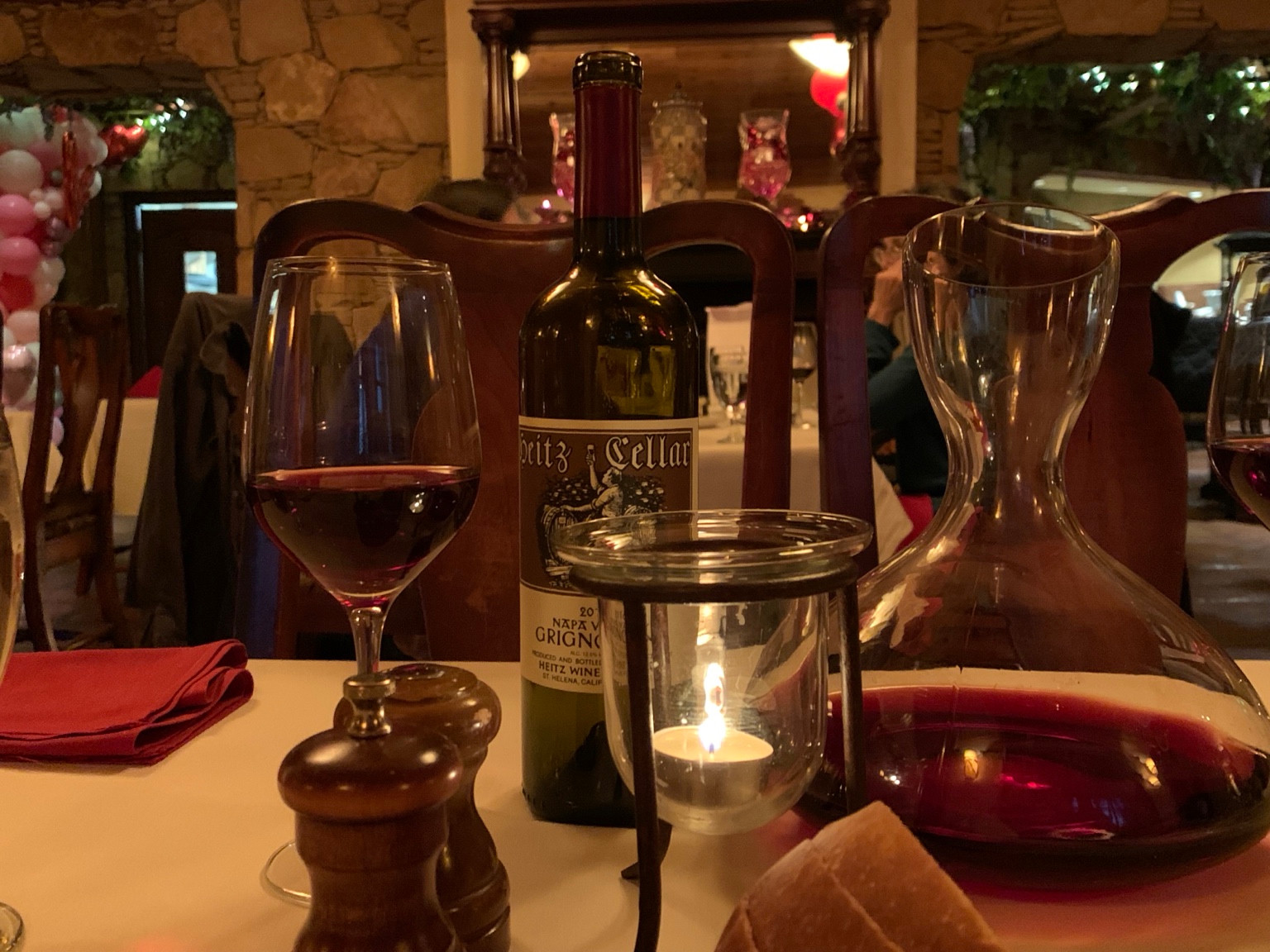
At the table
Tonight’s verdict: amazing.
That was the reaction to this Heitz Cellar Napa Valley Grignolino. Sometimes the most useful starting point is simply that a wine gave real pleasure.
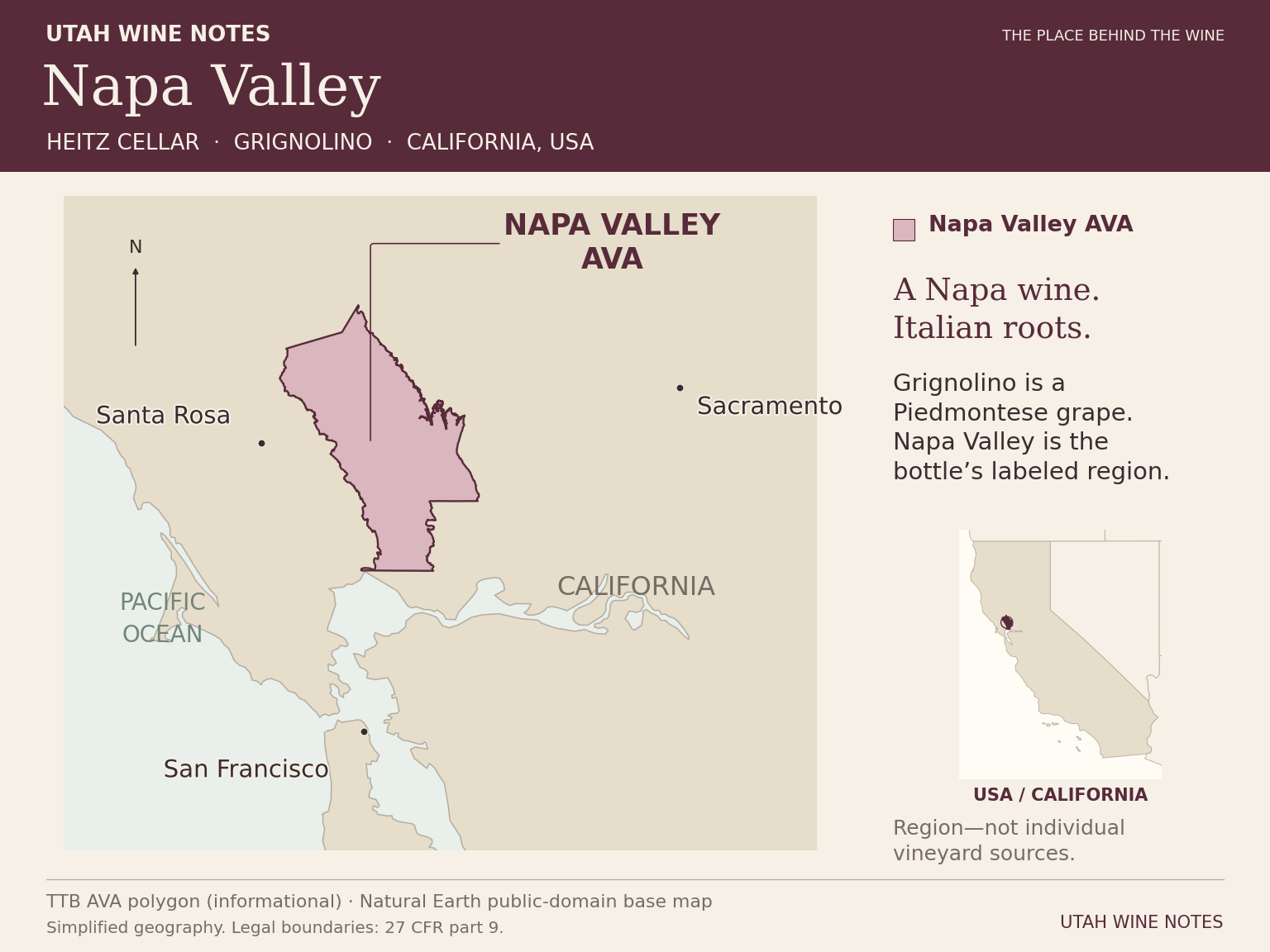
The bottle also opens a good conversation: a grape with Italian roots, made in Napa Valley by a producer with a long connection to it.
An Italian grape with a Napa story
Grignolino comes from Piedmont in northern Italy. Heitz’s own account traces its affection for the grape to 1959; its 2015 sheet describes older Grignolino vines and cuttings planted at the winery property in 1966. This is not simply an Italian name on a California label, but a variety with a place in the producer’s history. Heitz’s history and 2015 notes ↗
Producer context · Not the pictured vintage
What Heitz’s notes tell us
Heitz’s published notes for 2015 and 2016 describe strawberry and other red-fruit character, pronounced acidity, delicate tannins and white pepper on the finish. Both sheets report fermentation and six to nine months of aging in stainless steel.
These are reference vintages, not an identification of the bottle pictured. The photograph does not reveal its year, so the notes are a guide to Heitz’s expression of Grignolino rather than a list of flavors claimed for this glass.
Acidity and tannin: two different sensations
Acidity is the mouthwatering part of wine: it contributes freshness and keeps a wine from feeling flat. Tannins create a drying sensation and are part of its texture. They are not interchangeable, and neither is a fruit flavor. WSET’s guide to wine structure ↗ Understanding acidity ↗
In the producer’s descriptions, the combination is an energetic acid profile with a more delicate tannin texture. That is a useful distinction when deciding whether this unfamiliar grape sounds appealing. For a future bottle, pay attention to those two sensations separately rather than relying on the depth of its color.
The reason to remember it
This bottle was a reminder to leave room for discovery. The label may begin the conversation; enjoying the wine is what makes it worth continuing. For this evening, “amazing” says enough.